

Market Analysis
Why Two District 10 Landed Homes on the Same Street Can Sell for Very Different Prices
A new transaction on your street is evidence, not a verdict. Here is how to read it without overpricing your home or dismissing a genuine market signal.
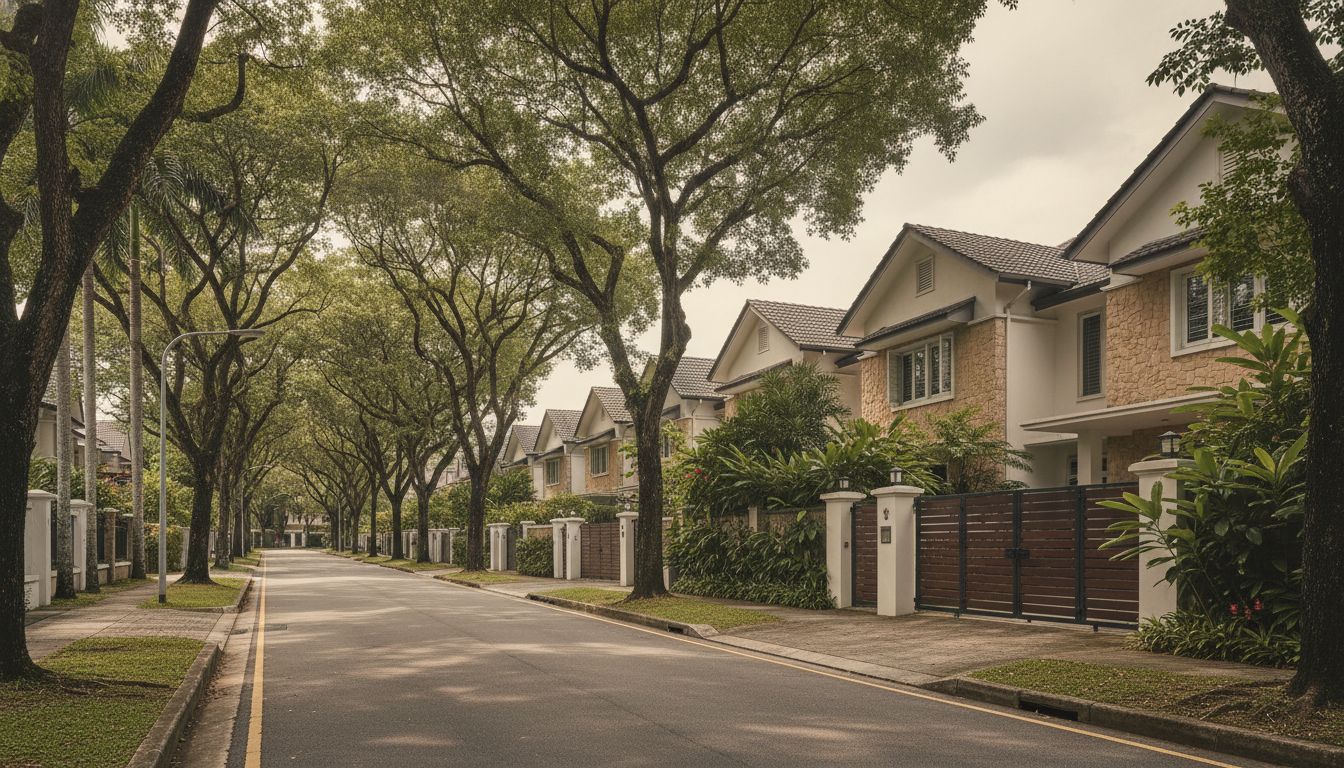
When a neighbour’s house sells, the first thing most owners do is look at the headline price. If the number is higher than expected, it is tempting to lift your own asking price to match. If it is lower, it is just as tempting to dismiss it as a one-off.
Both reactions share the same flaw: they treat the transaction price as the only fact that matters. In reality, two landed homes on the same District 10 street — same postal sector, same road name, sometimes even a similar facade — can transact at very different prices for entirely rational reasons. The price is real. What it means depends on what sits behind it.
A real comparison from Namly Avenue
The easiest way to see this is to compare two verified transactions on Namly Avenue recorded within five months of each other.
| Date | Property type | Land area | Price | Land PSF | Tenure |
|---|---|---|---|---|---|
| April 2026 | Semi-detached | 3,192.60 sq ft | $8,800,000 | $2,756 | Freehold |
| September 2026 | Semi-detached | 5,092.45 sq ft | $11,400,000 | $2,239 | Freehold |
Source: URA private residential property transaction data, supplied CSV extract covering January 2025–October 2026.
Both properties are freehold semi-detached houses on Namly Avenue. The September sale achieved a higher absolute price — $11.4 million against $8.8 million — but a lower land PSF: $2,239 against $2,756. The reason is visible in the land area column. The later sale was on a plot roughly 60 percent larger. The buyer paid more in total, yet paid less per square foot of land.
This is the central point. Without the land area, the $11.4 million figure looks like a stronger market signal than the $8.8 million figure. With the land area, it is simply a different transaction on a different-sized site.
Why this comparison is useful — and where it stops
The Namly Avenue pair is useful because it controls for several things that often confuse comparisons. Both properties share the same broad address, the same tenure and the same landed housing type. The transactions are only months apart, so they were shaped by broadly the same interest-rate and stamp-duty environment. The remaining difference that the record shows clearly is land area, and that alone is enough to flip the ranking between absolute price and land PSF.
But the comparison is also limited. The URA transaction record does not tell us the condition of either house, the width of the frontage, the plot shape, the orientation, the level of the site, or whether either buyer intended to rebuild. It does not tell us whether one seller was under time pressure, whether the sale involved related parties, or what financing terms were agreed. Those factors could push either price up or down, and we do not have enough information to assign them to these specific transactions.
That limitation is not a weakness of the data. It is a reminder that the record gives us evidence, not a complete explanation. The responsible reading is: these two sales show that land area can drive a large price gap even on the same street. Anything beyond that is interpretation.
Land PSF: the simplest comparison, and its limits
Land PSF is calculated by dividing the transacted price by the land area. For the April Namly sale:
$8,800,000 ÷ 3,192.60 sq ft = $2,756 per sq ft (approx.)
For the September sale:
$11,400,000 ÷ 5,092.45 sq ft = $2,239 per sq ft (approx.)
Land PSF is valuable because it removes the house from the comparison, at least conceptually. It lets you ask: what did the buyer pay for the site? This is especially helpful when one property has a larger or better-shaped plot, because the headline price alone would hide that advantage.
It also has limits. Land area is not the same as usable land. Boundary treatments, setback requirements, level changes, protected trees, driveway allocation and plot shape all affect what can actually be built or enjoyed. A narrow or irregular plot can carry the same land area as a regular one without commanding the same buyer premium. And as ticket sizes rise, the buyer pool narrows, which can put downward pressure on the per-square-foot rate even when the total price rises.
The gap between transaction evidence and interpretation
When reading any landed transaction, it helps to separate what the record proves from what you are inferring.
Evidence: the transacted price, the date, the land area, the property type, the tenure and the address. These are verifiable. In the Namly Avenue example, we can state with confidence that a freehold semi-detached house of roughly 3,193 sq ft sold for $8.8 million in April 2026, and that a freehold semi-detached house of roughly 5,092 sq ft sold for $11.4 million in September 2026.
Interpretation: why the prices differ, whether one was a better buy, what each buyer intended to do, and what either sale implies for the house next door. These are judgments. They can be well-informed, but they should be labelled as such.
The most common pricing mistake is to take a single transaction — especially the highest one — and treat it as the new benchmark for every similar address. That mistakes interpretation for evidence. A more reliable approach is to build a small set of comparables, score each one against the same property-specific factors, and see where your home sits in the range rather than at the headline.
Other factors that widen or narrow the gap
Beyond land area, here are the factors that most often explain why two same-street homes trade at different prices. Some are visible on a site visit; others require title checks or planning knowledge.
Plot ratio and rebuild potential
URAs Master Plan and Development Control guidelines set the allowable plot ratio and use for each site. A parcel with more buildable gross floor area, favourable height envelopes or fewer setback constraints may attract a different buyer pool from one with tight planning limits. This matters whether the next buyer is an owner-occupier or a developer.
Tenure
Freehold, 999-year leasehold and 99-year leasehold land are not priced identically. Freehold land typically carries a premium because there is no lease decay or top-up event on the horizon. As a lease shortens, the discount tends to widen, particularly for buyers with a long holding horizon. SLA records establish tenure; it is not guesswork.
Built form and condition
A recently rebuilt home can justify a higher price than a structurally tired house on a similar plot. But a tired house on a good plot can also trade strongly if buyers are pricing it for redevelopment. The same physical condition can therefore be read in opposite ways depending on the buyer’s objective.
Frontage, orientation and micro-location
Wider frontage, regular plot shape, north-south orientation, distance from the main road, and proximity to a school or park can all influence value. Two homes on opposite sides of the same street can sit on different levels, back onto different lanes or face different directions. Those details accumulate into price differences.
Buyer motivation and timing
Individual buyers sometimes pay more because they need a specific house: a neighbour expanding sideways, a family returning to an estate, or a purchaser with a firm completion deadline. That is not a market bubble. It is a single transaction shaped by specific circumstances.
How sellers can avoid anchoring on the wrong comparable
Anchoring is the tendency to fixate on the first number you see — usually the most recent or the highest sale — and adjust insufficiently from it. For District 10 landed owners, the antidote is to ask structured questions before setting an asking price.
- What is my land area, and how does it compare to the recent sale?
- Is my tenure the same — freehold, 999-year or 99-year?
- What is my allowable plot ratio, and would a rebuild be attractive to the next buyer?
- Is my house move-in ready, a renovation candidate, or a redevelopment play?
- How do my frontage, orientation and micro-location compare?
- Was the comparable an arm’s-length sale, or did it involve special circumstances?
If the recent sale was on a 5,000 sq ft plot and yours is on 3,200 sq ft, the relevant number is not the $11.4 million headline. It is the $2,239 to $2,756 land PSF range, adjusted for whatever else differs between the two houses. Conversely, if your plot is larger and better configured, a lower absolute price nearby should not automatically pull you down.
For a practical framework on deciding whether to sell, rebuild or renovate, see Rebuild, Renovate or Sell Your District 10 Landed Home? A Decision Guide for Owners.
The Corvin Perspective
In District 10, the most dangerous price is the one you remember without its context. A neighbour’s sale is evidence, not a verdict. The real work is understanding whether your home is comparable in the dimensions that matter to the next buyer.
Our view is that landed pricing is less about finding a perfect comparable and more about understanding the range. Every street has a price band, and within that band there are usually clear reasons why one home sits at the top and another at the bottom. The owner who understands those reasons can price with confidence. The one who simply matches the last headline price often ends up either disappointed or undersold.
We also separate what is verifiable from what is interpretive. Land area, tenure, plot ratio and transaction history can be checked. Condition, liveability and future buyer appeal require judgment. Keeping the two apart is what keeps advice honest.
Frequently asked questions
Why do two landed homes on the same street sell for different prices?
Transaction prices reflect land size, tenure, built form, condition, plot ratio, orientation, frontage and buyer motivation — not just address. Two homes on the same street can therefore transact at very different prices while both being rational outcomes.
What is land PSF and why does it matter for landed homes?
Land PSF, or price per square foot on land area, is calculated by dividing the transacted price by the land area. It strips out the house and helps buyers and sellers compare sites on a like-for-like basis, especially when one property has a larger or better-shaped plot.
Can I use my neighbour's sale price as my asking-price benchmark?
Only as a starting point. You still need to adjust for land size, tenure, plot ratio, built condition, orientation, frontage and whether the buyer was a user or a developer. A headline price without context can mislead more than it guides.
What is the difference between a valuation opinion and an official valuation?
A valuation opinion is an informed view of where a property might trade, often based on comparable transactions and market knowledge. An official valuation is a report prepared by a licensed appraiser for financing, legal or tax purposes and follows prescribed methodology.
Do transaction records show everything about a sale?
No. Public records typically show the address, price and date. They usually do not reveal renovation spend, defects, buyer-seller relationships, holding period, financing terms or whether the price included furniture, fittings or a deferred payment structure.
Advisory
Before you set your asking price
Understand how your land area, tenure and plot ratio compare to recent same-street transactions before anchoring on a headline price.
Explore seller advisoryRelated reading
Namly vs Lantana vs Cypress: Which Landed Location Fits Your Family?
A street-level comparison of three District 10 enclaves using transaction data and practical family-buyer criteria.

Rebuild, Renovate or Sell Your District 10 Landed Home?
A practical decision guide for owners weighing renovation, rebuilding or sale.
Sources and verification
The Namly Avenue transactions cited in this article were extracted from a URA private residential property transaction data CSV supplied to Corvin Homes, covering the period January 2025 to October 2026. The figures were cross-checked for address, transaction date, property type, land area, transacted price and tenure before publication on 14 October 2026.
Additional context was drawn from the following public sources:
- Urban Redevelopment Authority (URA): Master Plan, Development Control parameters and landed housing guidelines.
- Singapore Land Authority (SLA): land tenure, title information and land area records.
- Inland Revenue Authority of Singapore (IRAS): stamp duty and property tax guidance.
- Building and Construction Authority (BCA): gross floor area definitions and building control standards.
- Council for Estate Agencies (CEA): practice guidelines for property agency work and transaction data.
Land PSF figures are rounded to the nearest dollar. Calculations are based on the verified transacted prices and land areas shown above. No assumptions have been made about building condition, renovation status or buyer motivation for the Namly Avenue transactions, because those details were not available in the transaction record.
About the author
Taufiq Corvin (CEA Registration R060478C) is a landed property specialist with Huttons Asia Pte Ltd and the advisor behind Corvin Homes. He works with buyers and sellers of District 10 landed homes, with a focus on Namly, Lantana, Cypress and surrounding enclaves.